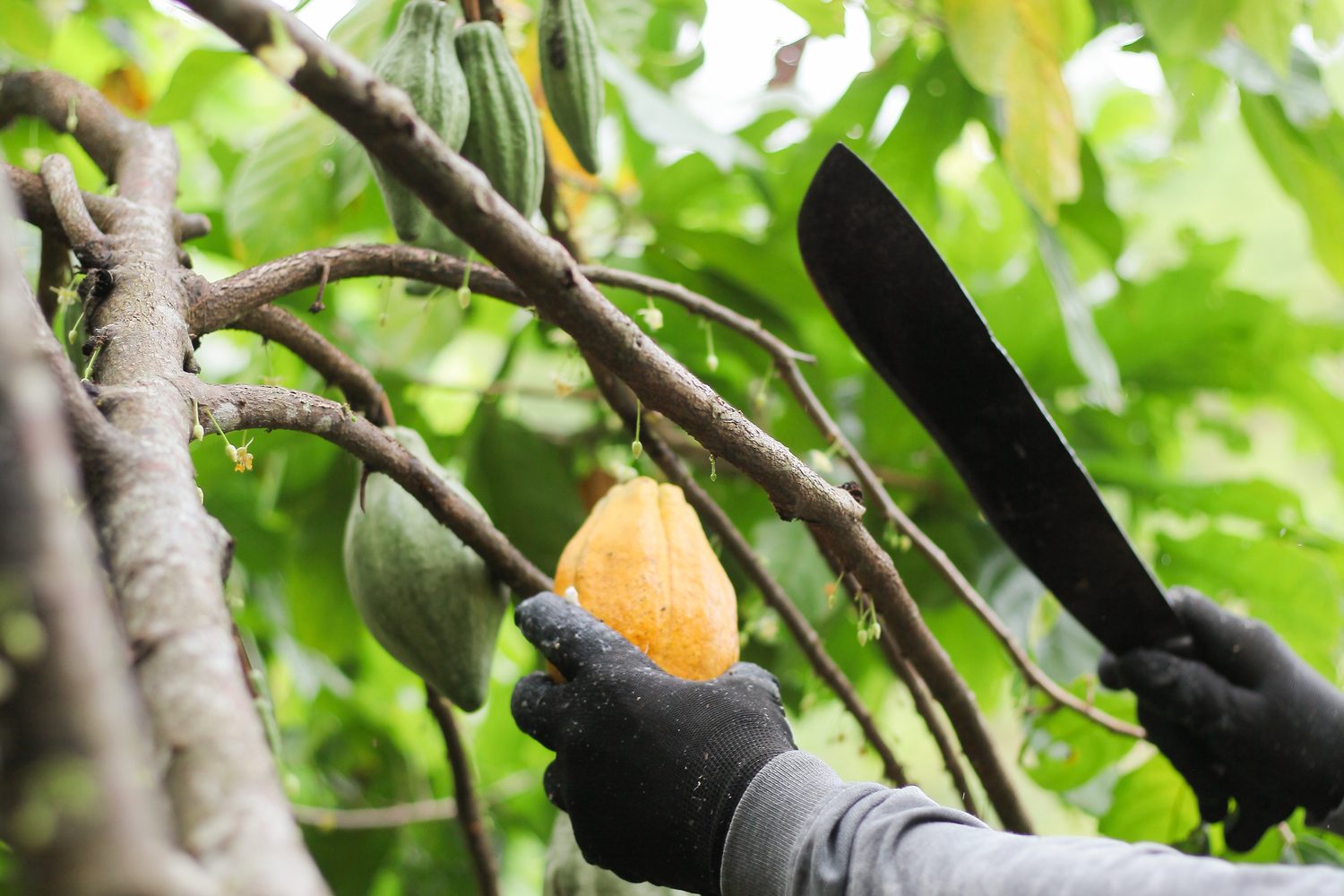
It's one of the rarest cacao varieties in the world, hard to grow and nearly extinct a few decades ago. It grows on our farm in the mountains of Maceo. Here's what sets it apart.
Almost all the chocolate eaten in the world comes from a single variety: forastero. It is hardy, high-yielding, and tastes strong and bitter. It works for industrial-scale chocolate, which is why it accounts for around 80% of world production.
Criollo is the opposite. It fruits sparingly, falls ill easily, and needs constant attention. In return it gives something forastero cannot: floral aromas, notes of fruit and nut, and a soft bitterness that doesn't bury everything else. It makes up around 5% of the planet's cacao, and genuinely good criollo is rarer still.
Our criollos are three selections of our own, B6, B8 and B9, found on this same land. They are called porcelana for the bean: when you open the pod, the seeds are almost white, the colour of porcelain. In most cacaos the bean is purple, from the same compounds that carry bitterness. A white bean means less bitterness and more room for aroma.
There's a simple way to confirm it, called the cut test: split the bean in half and look at the colour. In ordinary criollo, 20 to 30% of beans still come out purple. In ours, the overwhelming majority are white.
Criollo is called the prince of cacaos. Almost nobody grows it, because on a spreadsheet it makes no sense.
It came close to disappearing. Through much of the twentieth century criollo groves were replaced with more productive varieties, and few pure trees remained. What exists today survives because someone chose to keep it going even though it yielded less.
Our trees are local. Nothing was imported or relocated: the mother trees were found here in Maceo, chosen for their white, aromatic beans, and multiplied by grafting ever since. Grafting is what guarantees the variety stays the variety, no crossbreeding, generation after generation.
Industrial plantations plant at 3 × 3 metres to squeeze out yield. We plant at 4 × 4. The trees get light and air, disease pressure drops, and the cacao is better for it. Every tree carries its own number and a written record of when it was planted and when it was grafted.
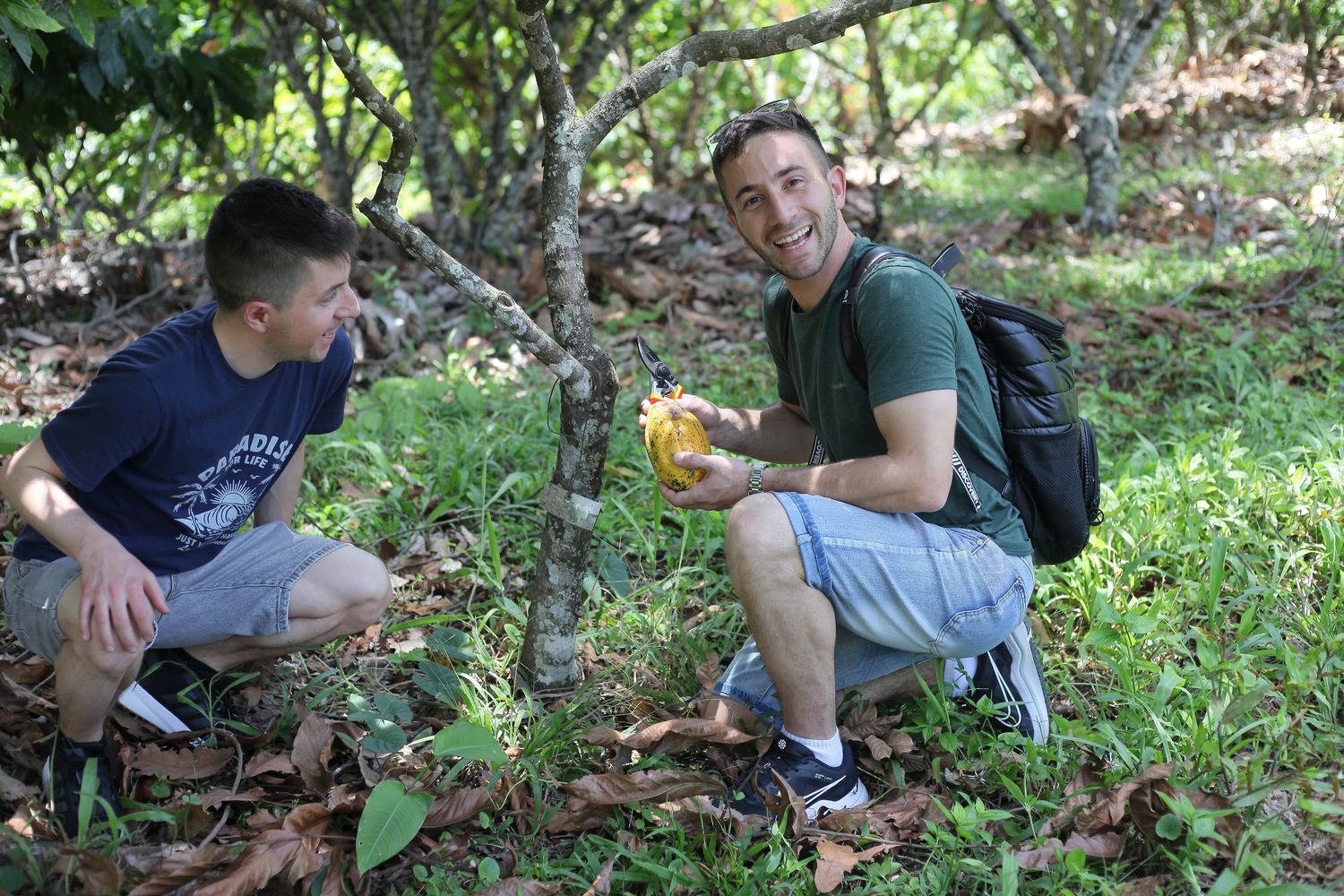
We farm biodynamically: our own compost, natural cycles, no synthetic agrochemicals. The farm is understood as a living organism, where soil, trees, animals and people form one system.
We are one of only about five cacao farms in the world holding Demeter certification, the most demanding standard in this kind of agriculture. It isn't label decoration: it changes how the soil is managed, what comes onto the farm and what doesn't, and over time it changes the flavour.
The cacao has been recognised beyond the farm too: most innovative cacao farm in Colombia according to Fedecacao in 2018, and one silver and three bronze medals at the International Chocolate Awards in 2019.
Flavour, though, isn't settled in the tree. It's settled in fermentation: the days the bean rests in wooden boxes, wrapped in its own pulp, while the yeasts do their work. Excellent cacao badly fermented makes mediocre chocolate. Excellent cacao well fermented makes something you remember.
The boxes are built from Sapán hardwood, chosen because it is neutral and lends the bean none of its own flavour. Temperature and pH are measured through the process to find the right moment for each turn. Then comes drying, slow, on wheeled platforms rolled under shelter during the hottest hours, the beans turned every two hours so they dry evenly.
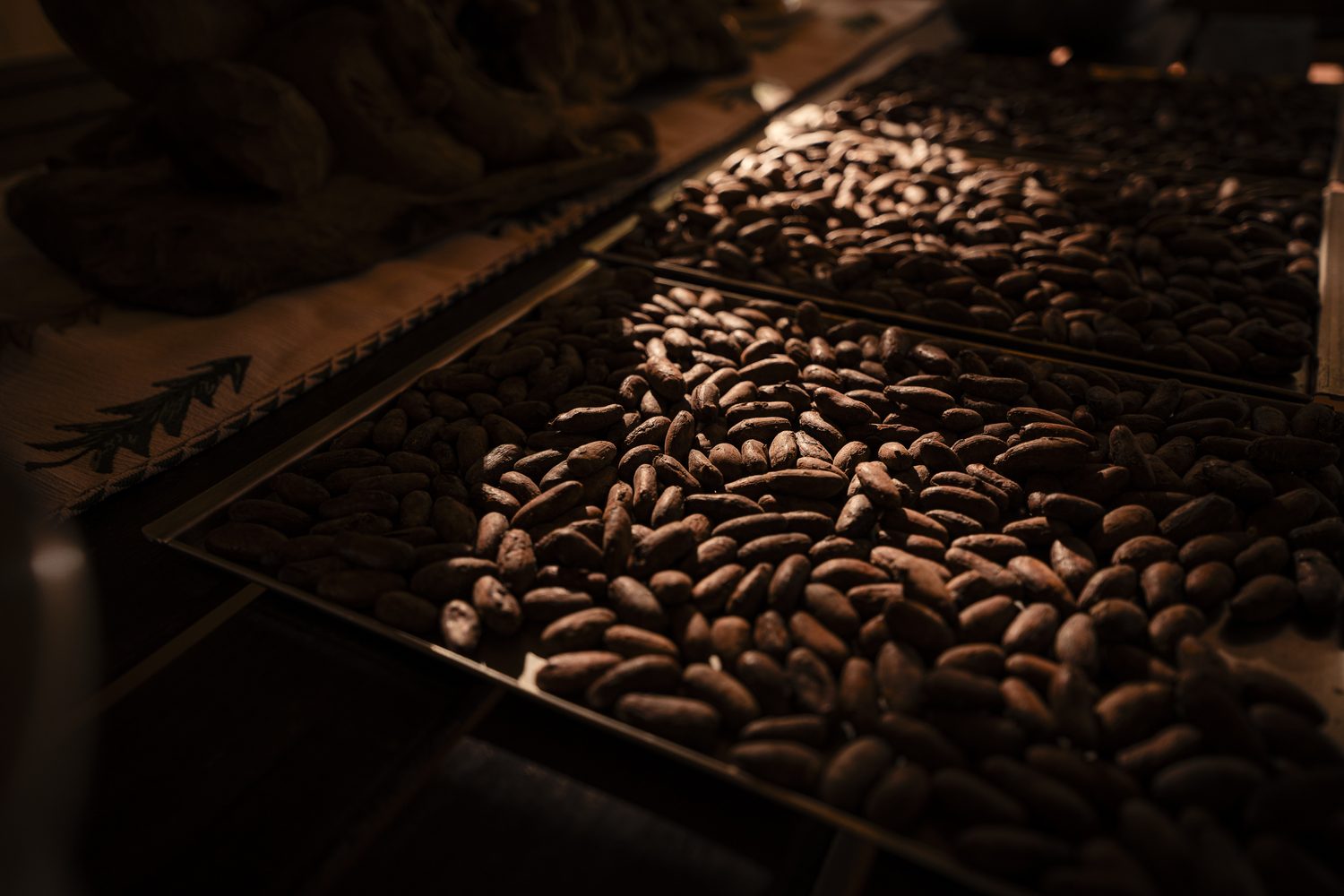
That's why the farm tour always ends the same way: tasting cacao in its different states. The fresh pulp, sweet and sharp, which surprises nearly everyone because it tastes nothing like chocolate. The dried bean. And finally hot chocolate, made from the same cacao you saw hanging on a tree an hour earlier.
It's the shortest way we know to explain why this matters.